
NEUROMANCER
Entrant Company
Xiayu Zhao
Category
Architectural Design - Museum, Exhibits, Pavilions
Client's Name
Country / Region
United States
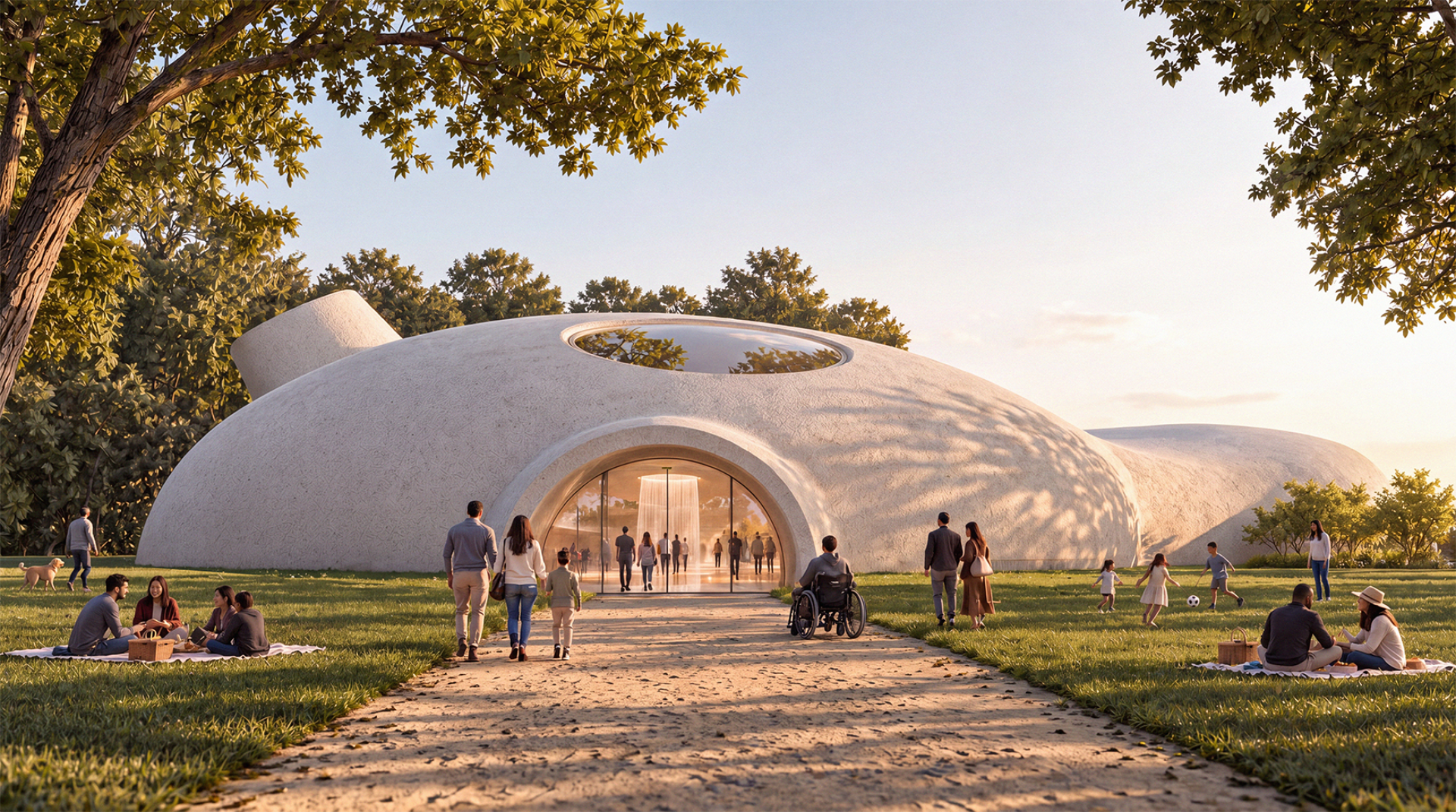
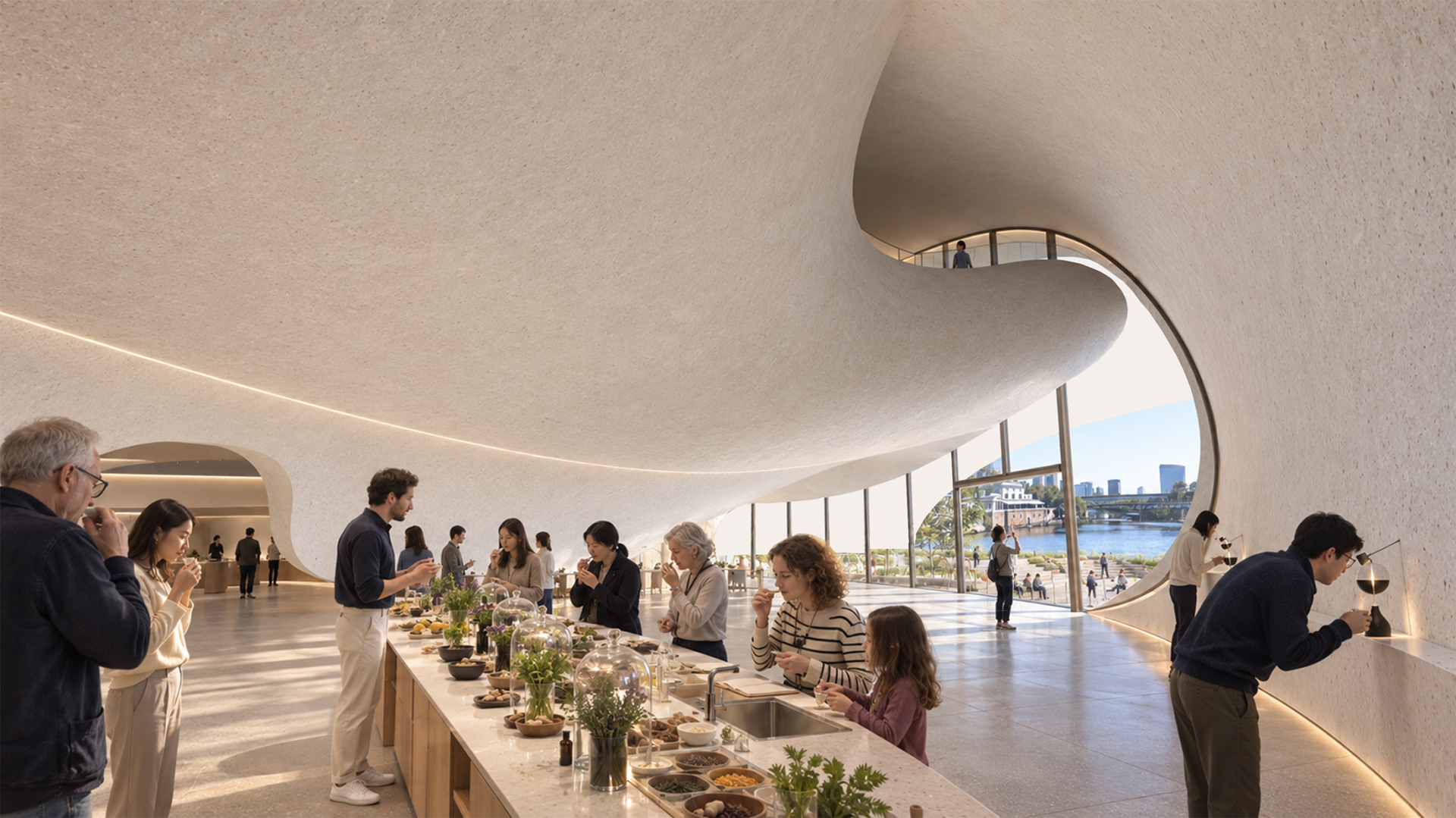
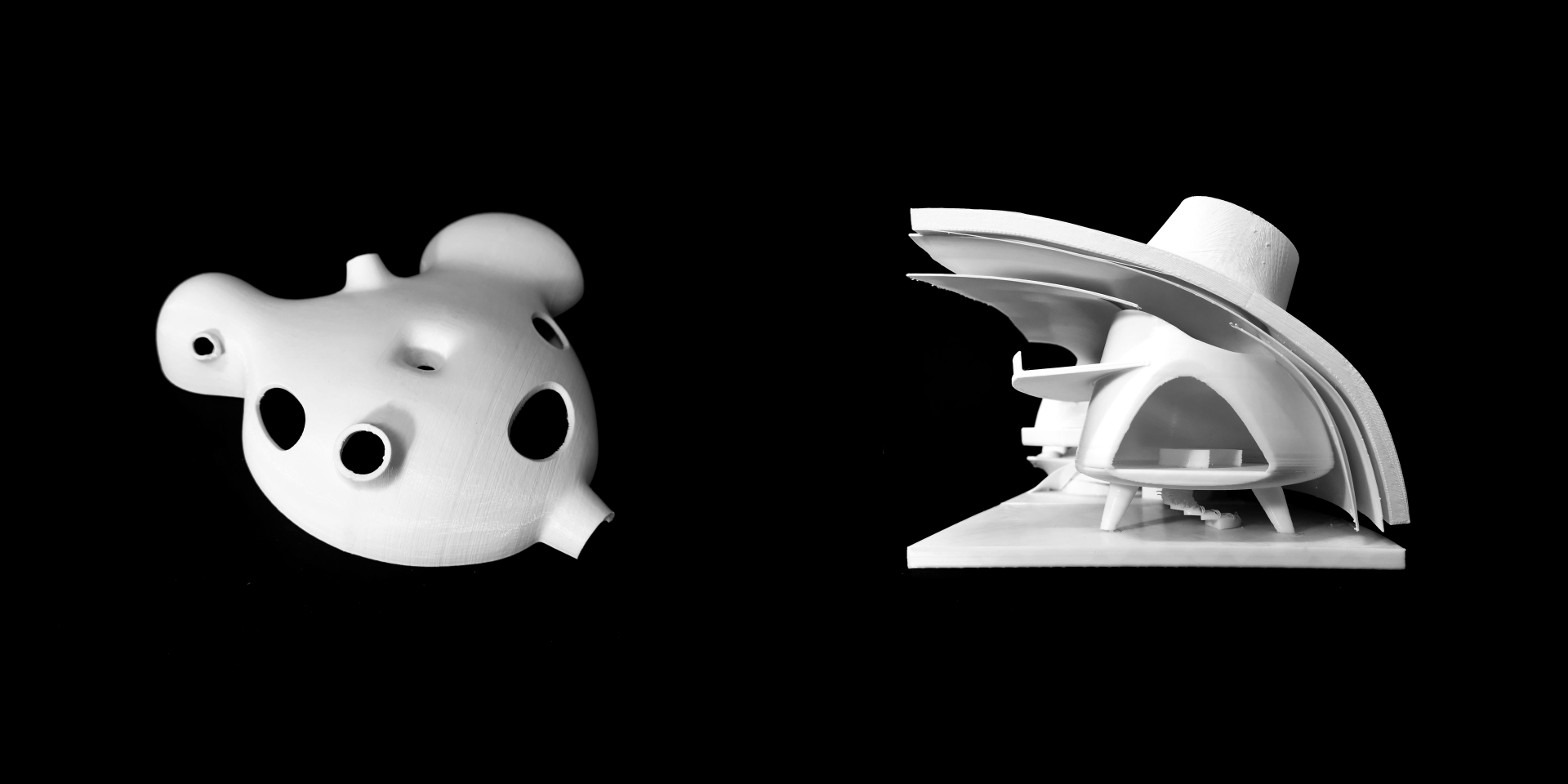
Museums have traditionally privileged vision, presenting art as something to be observed from a distance. This project asks whether architecture can expand that experience: Can a museum engage the full spectrum of human senses and allow visitors to encounter art through sound, touch, smell, taste, movement, and atmosphere? Conceived as an architecture of sensory exchange, the proposal transforms the museum from a container of objects into an active, three-dimensional organoleptic environment.
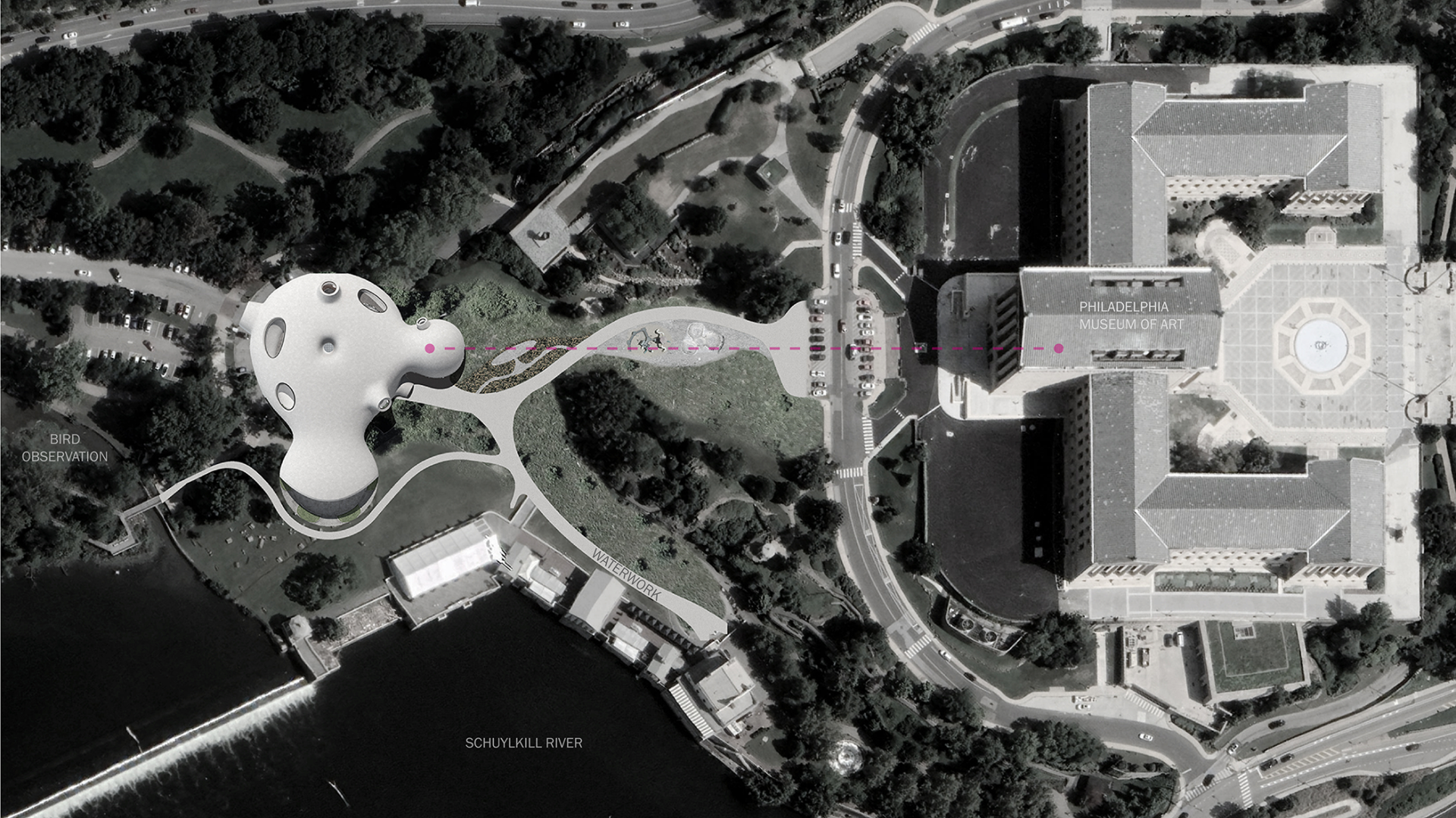
The design takes inspiration from the neuron—the biological foundation through which sensory information is received, processed, and transmitted. At the center of the project is a white, rounded body that functions like a cell body, gathering visitors and distributing activity throughout the building. Around it, a continuous membrane stretches outward, forming a series of spatial extensions that reach toward the historic Fairmount Water Works, the Schuylkill River, and the Philadelphia Museum of Art. These gestures connect the new institution to the physical and cultural signals of its surroundings while framing views, daylight, movement, and sound.
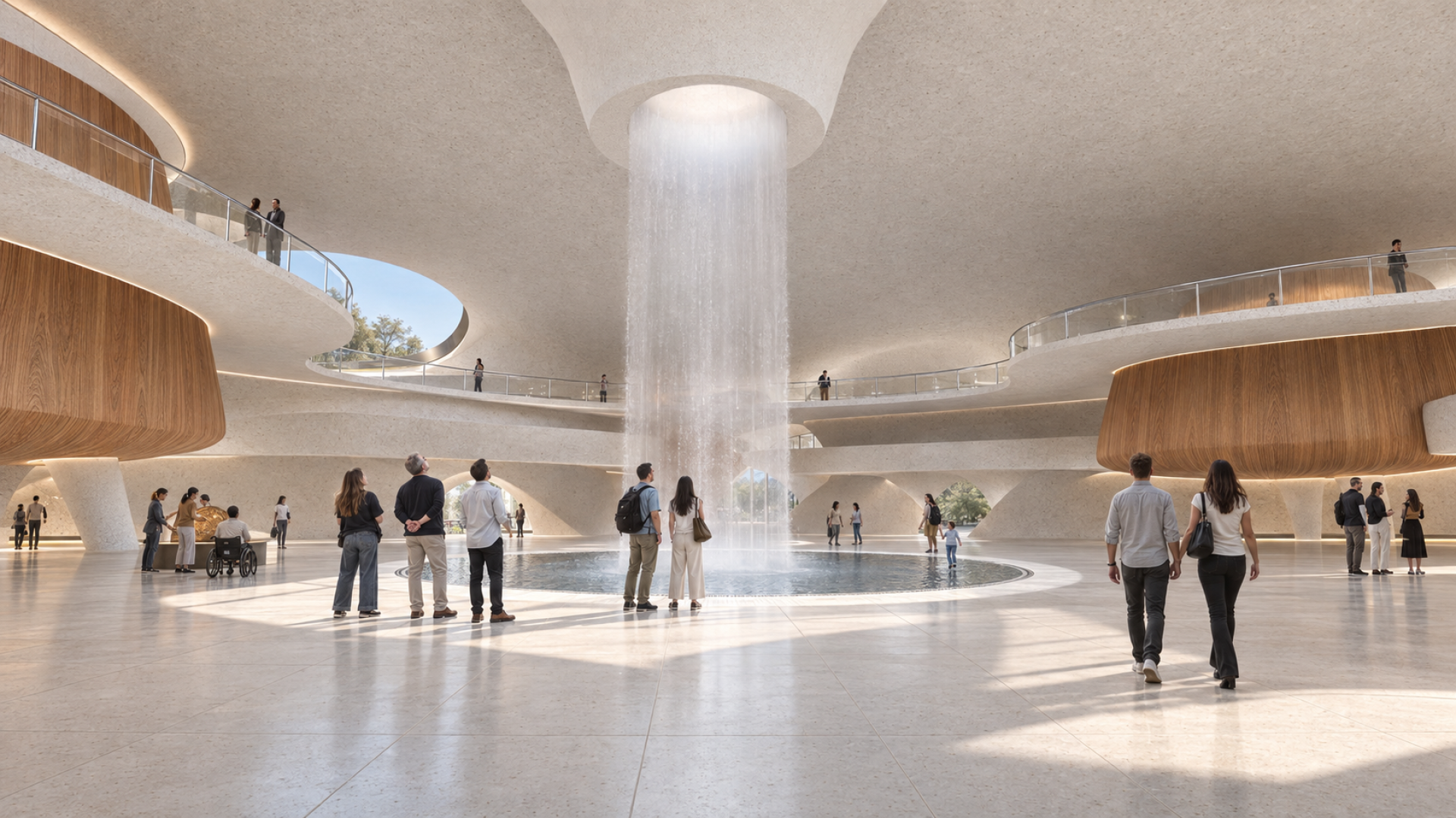
Within the membrane, programs are organized as interconnected “organelles,” each supporting a different mode of perception. A music theater and sound-art spaces emphasize resonance and vibration; haptic galleries invite direct tactile engagement; culinary workshops activate taste and smell; and sensory reading rooms create quieter environments shaped by texture, acoustics, and filtered light. Rather than functioning as isolated rooms, these spaces overlap and communicate, allowing one sensory experience to anticipate or echo another.
Curving surfaces, changing material densities, framed openings, and the movement of water guide visitors intuitively through the museum. The central waterfall becomes both an orientation device and a multisensory event—visible, audible, and perceptible through humidity and temperature. Roof apertures introduce shifting daylight and reflections, connecting interior experience to the sky and landscape.
By translating the structure and behavior of a neuron into architecture, the project proposes a museum that is not simply seen, but physically and emotionally inhabited. It offers an inclusive cultural environment in which perception is plural, participation replaces passive observation, and art is encountered through the entire body. Architecture becomes the medium that brings these sensory relationships into focus.

Credits

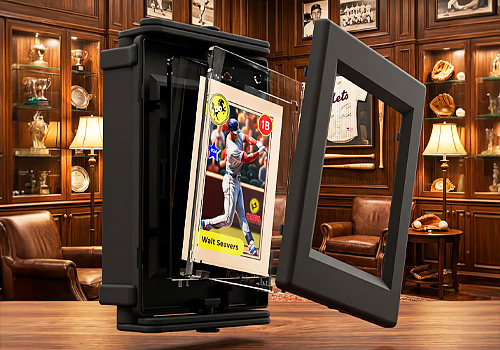
Entrant Company
3DSEASON
Category
Product Design - Unexpected Design
Entrant Company
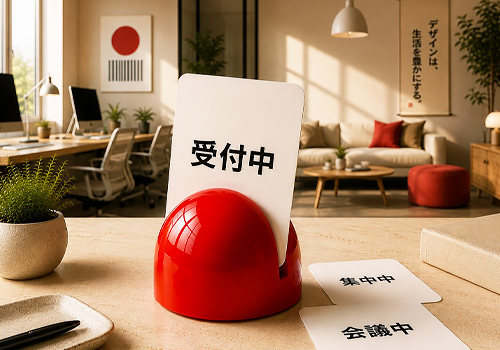
Systeach.com, LLC
Category
Product Design - Hobby & Leisure
Entrant Company
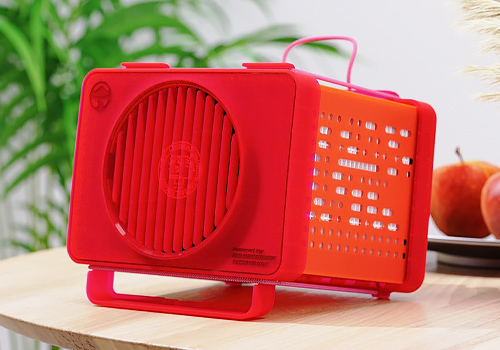
Soon
Category
Product Design - Unexpected Design
Entrant Company
United Nations University Hub at Lingnan
Category
Product Design - Eco / Green