
Goodji(覺)
Entrant Company
Category
Character & Pop Design - New Category: Character-driven Cultural Generation System
Client's Name
Liu Chun Lun
Country / Region
Hong Kong SAR
Goodji
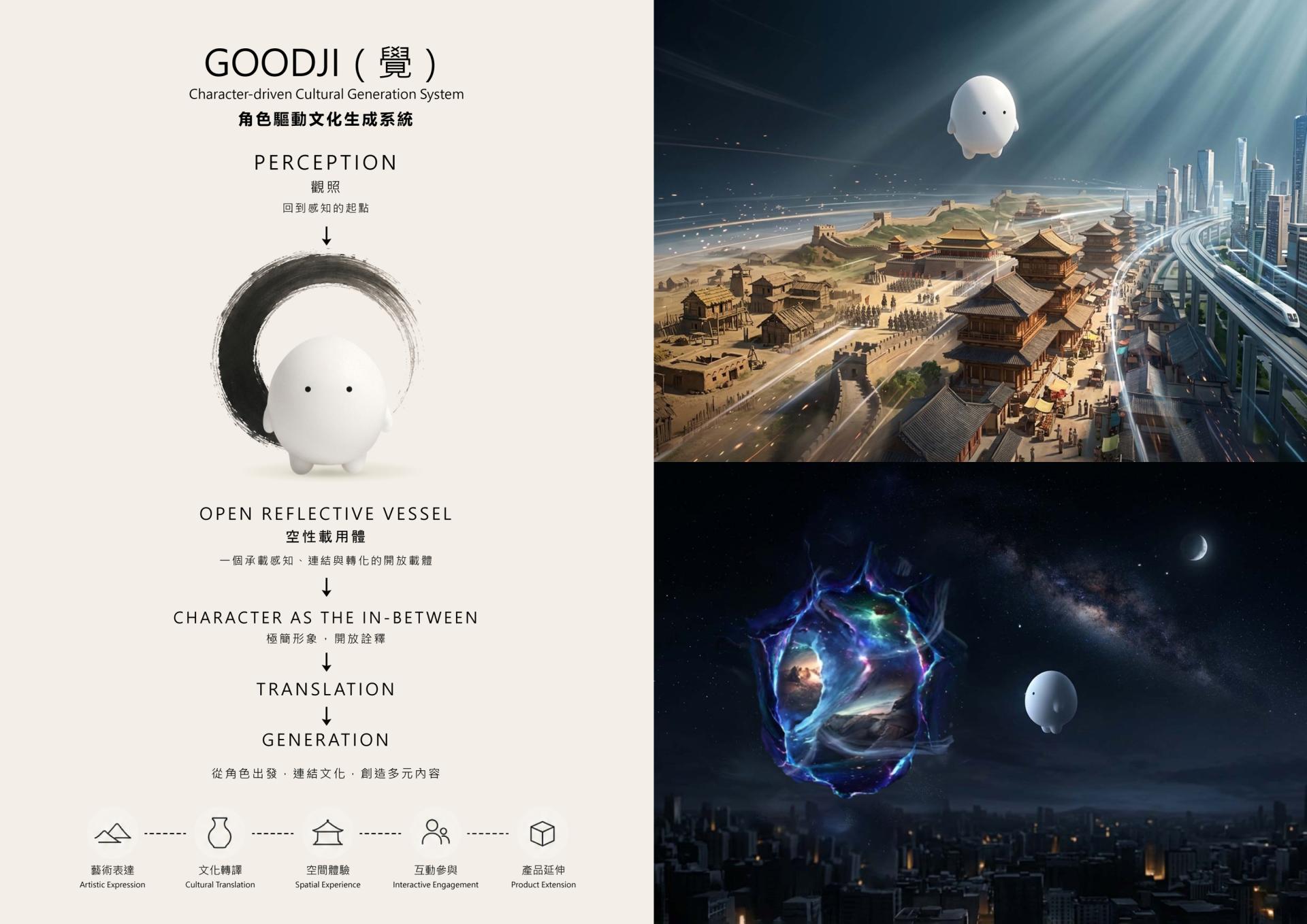
A Character-driven Cultural Generation System
Goodji presents a character-driven design methodology that explores how an original character can function beyond visual representation.
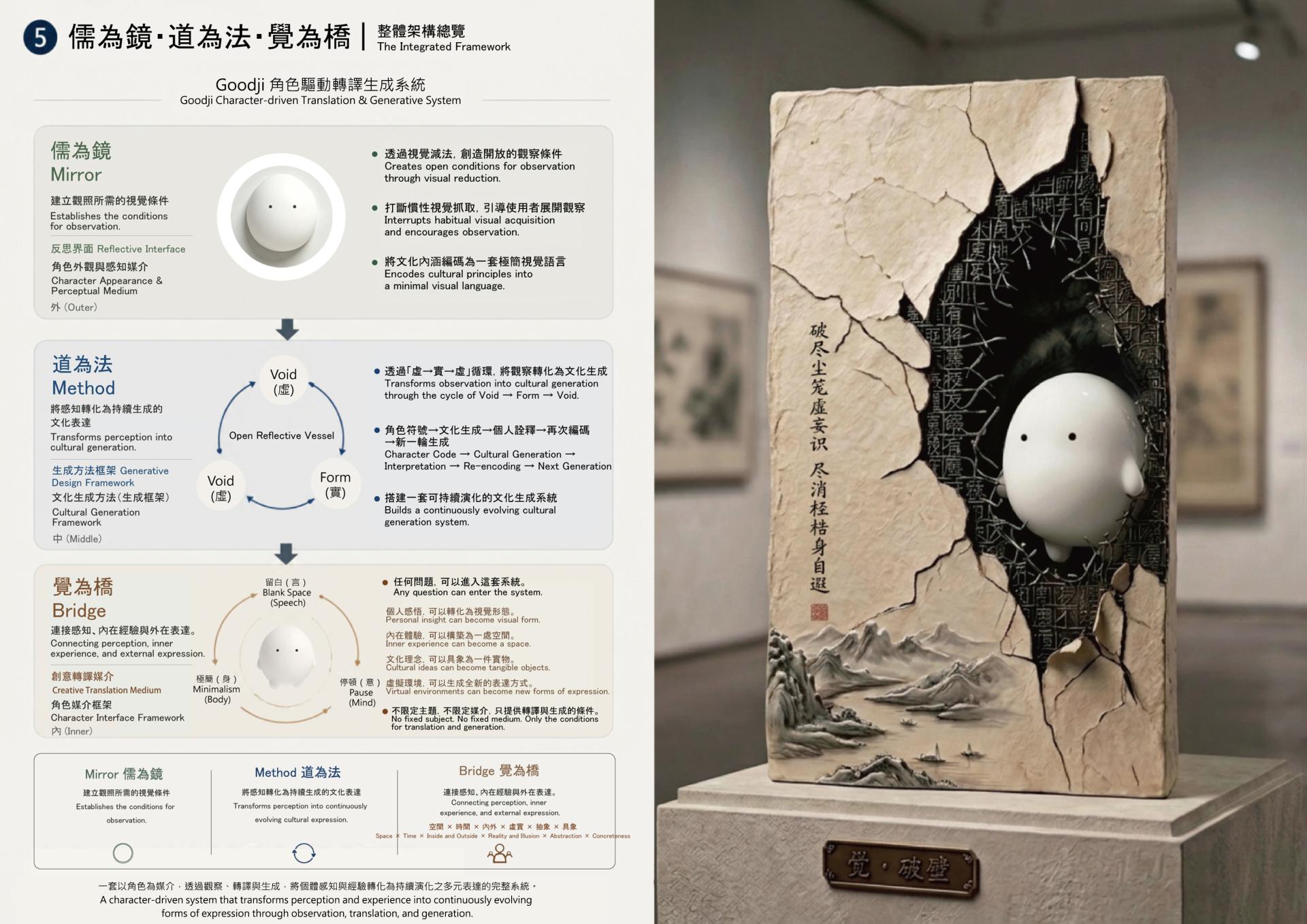
Rather than serving only as a mascot or storytelling device, Goodji operates through three interconnected functions:
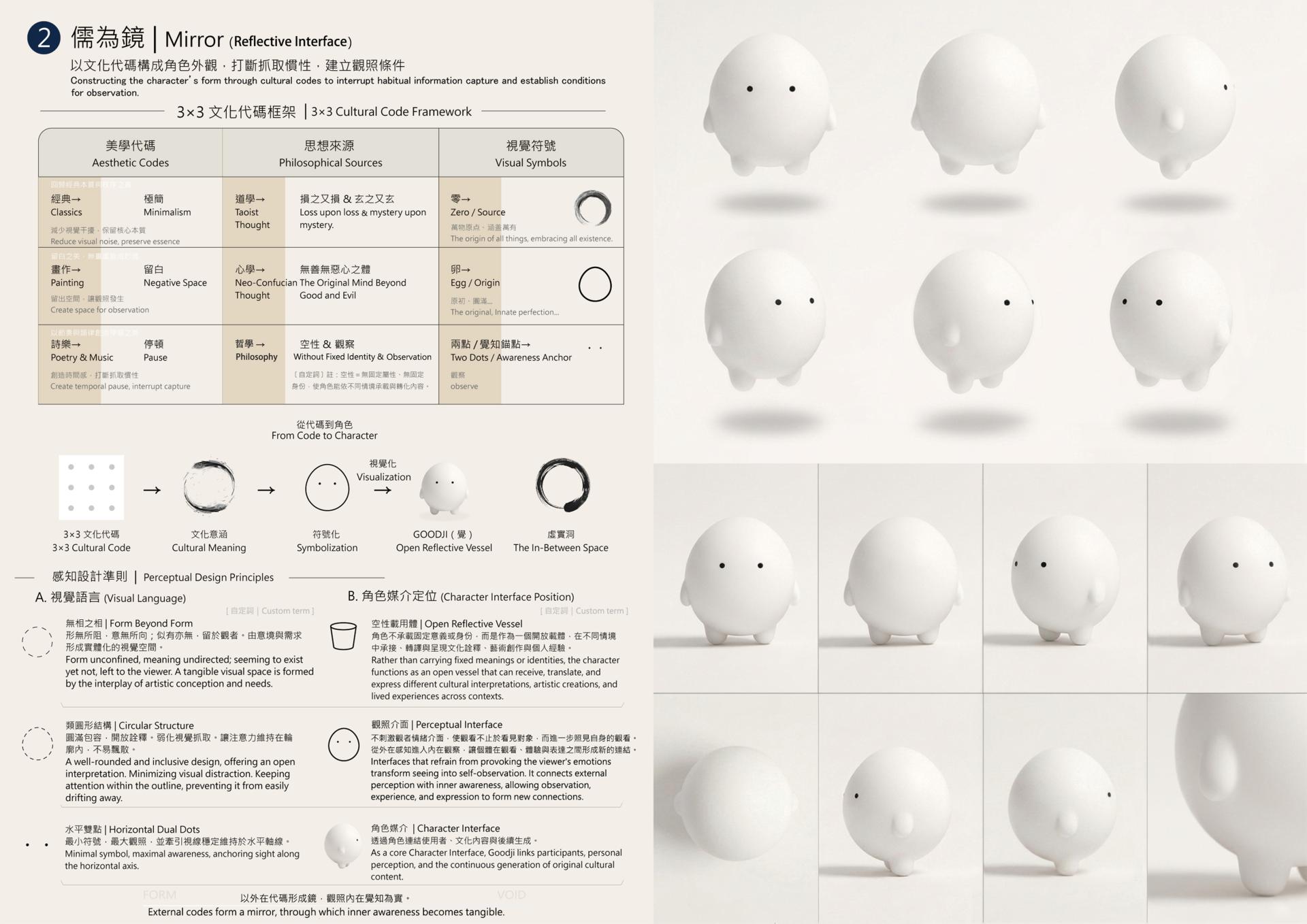
Mirror establishes the conditions for observation.
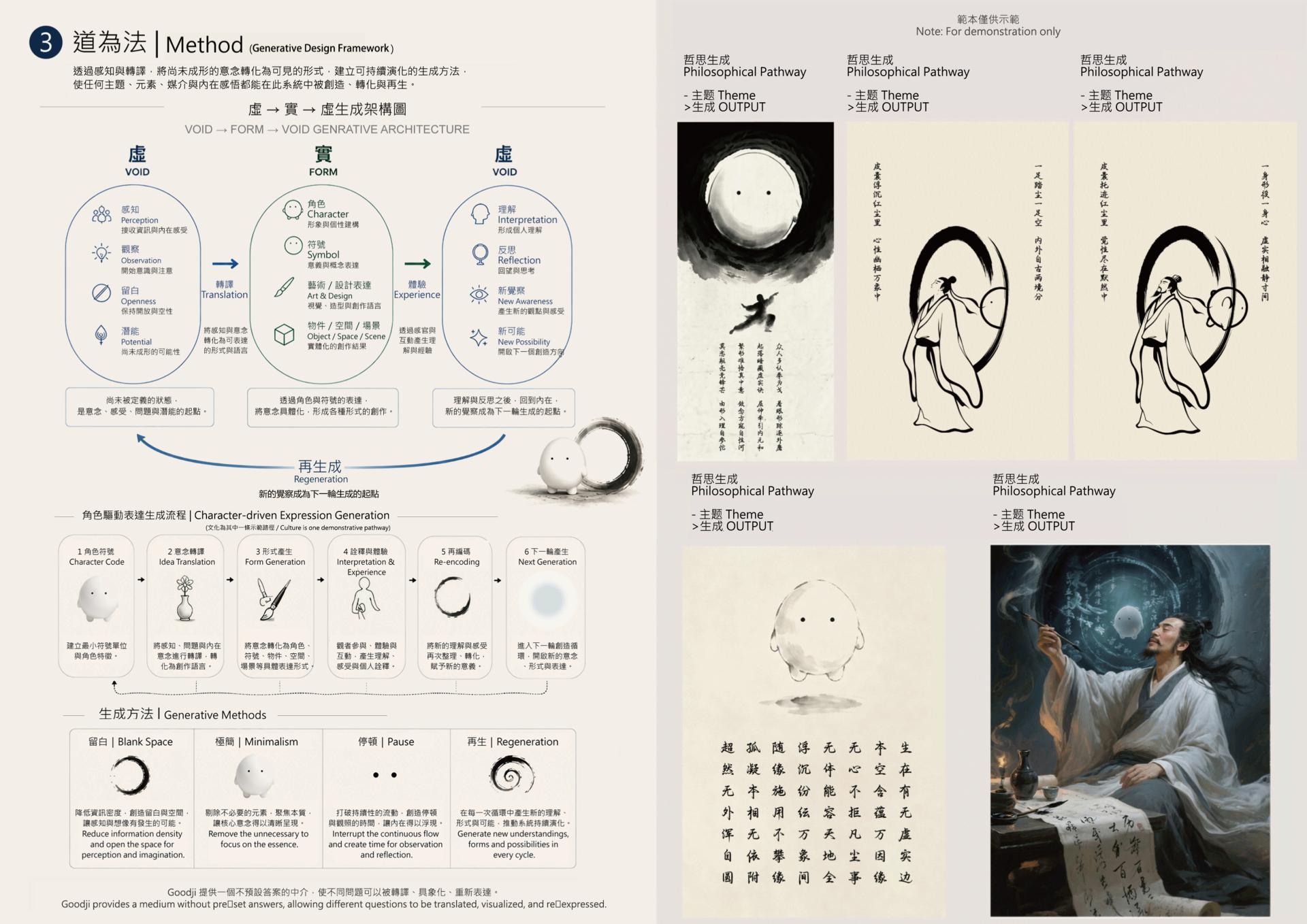
Method transforms perception into cultural generation.
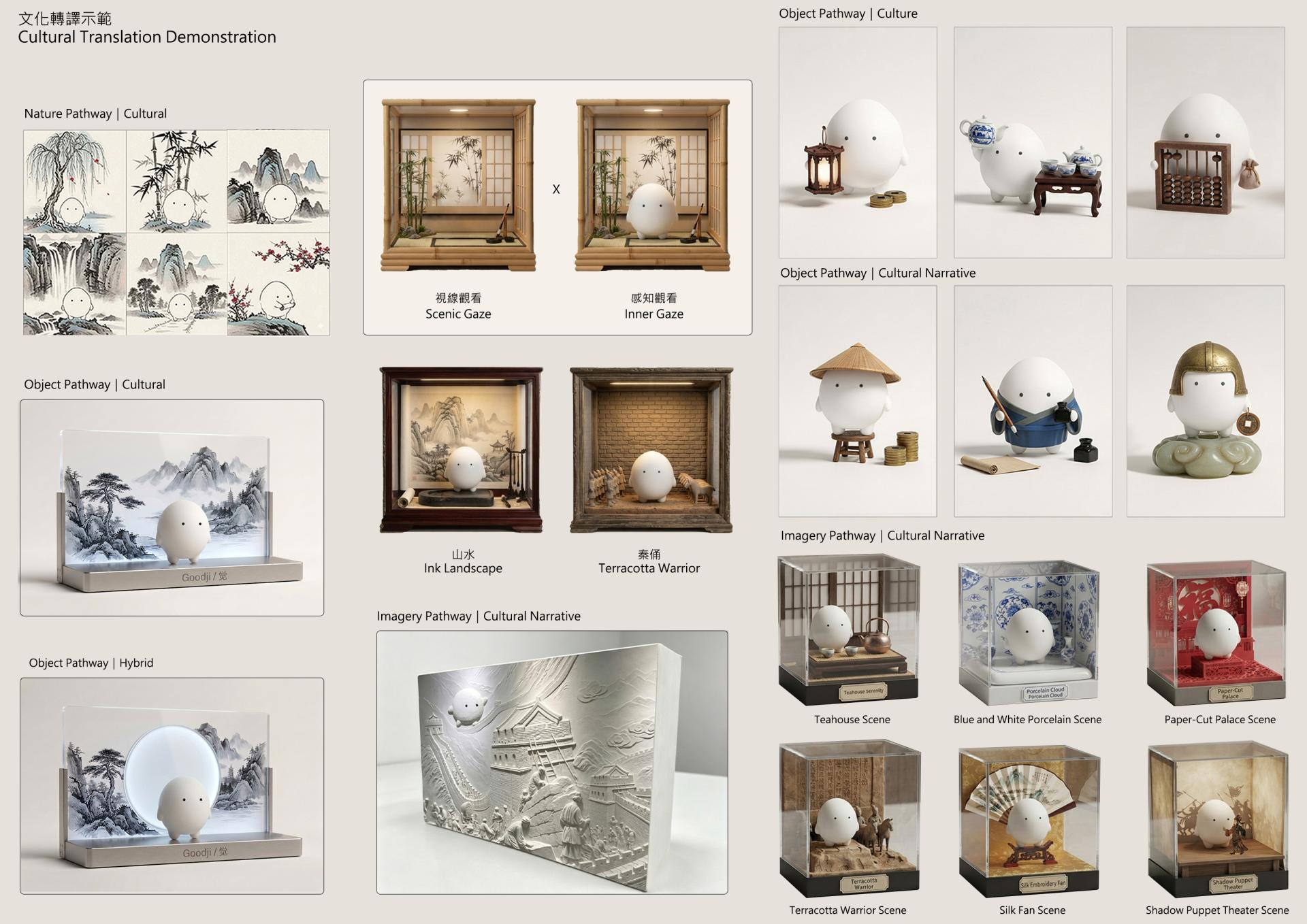
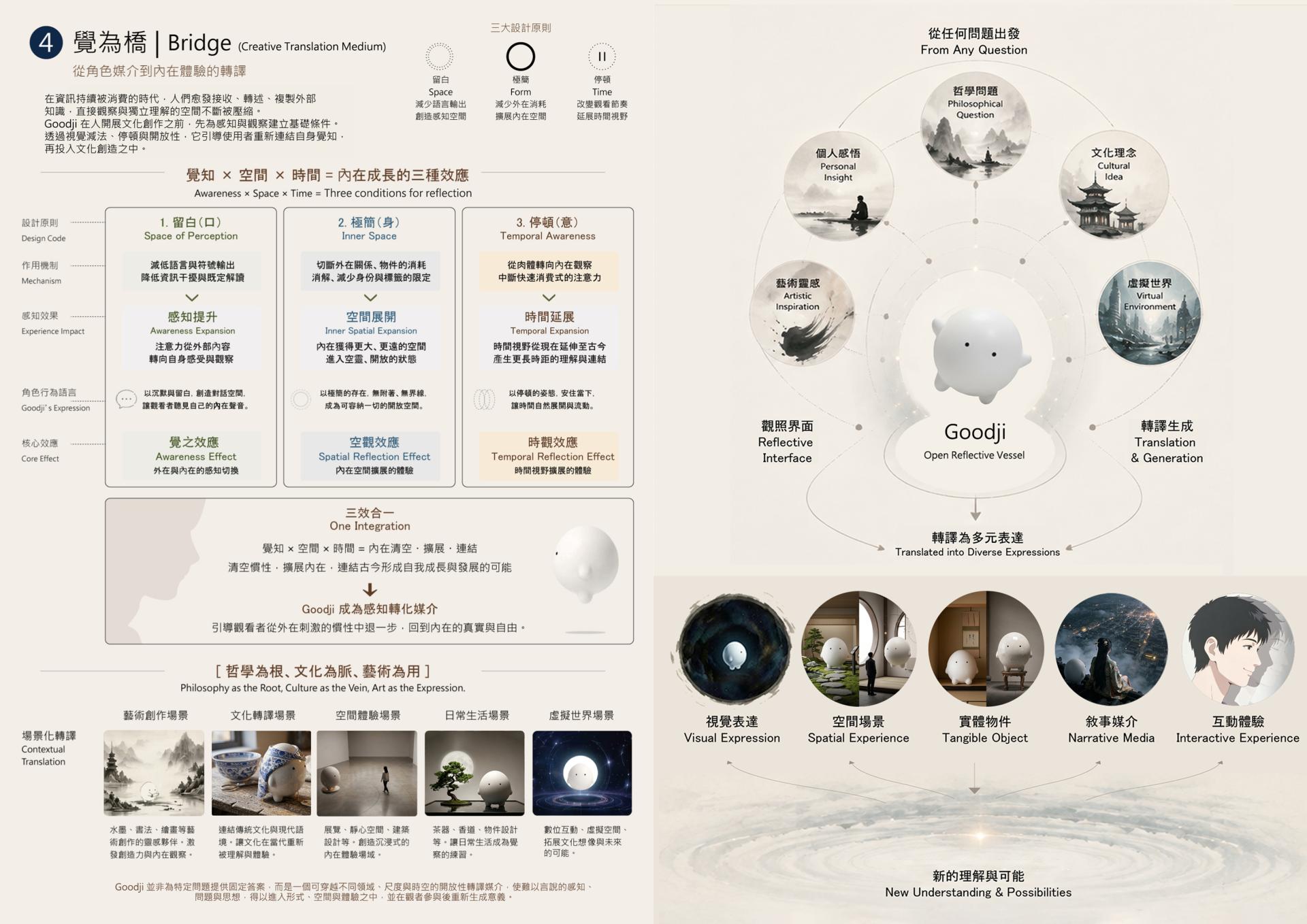
Bridge translates personal perception and experience into new forms of expression.
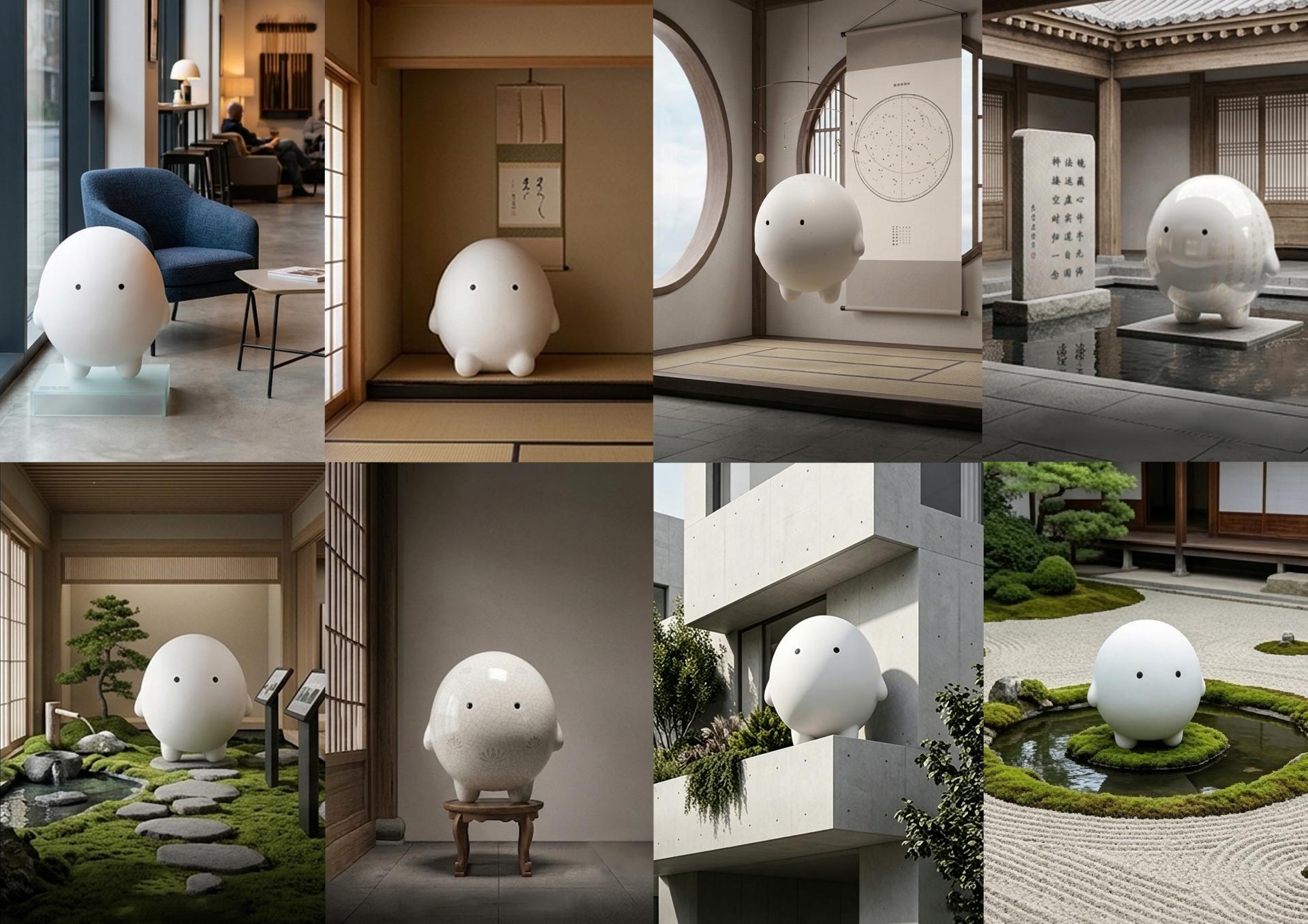
Together, these functions position the character as an open cultural medium capable of continuously generating new expressions across different subjects, contexts, and forms.
—
Design Context
Contemporary life is shaped by continuous information acquisition, visual stimulation, and rapid redistribution.
Goodji does not compete for attention. Instead, it explores how character design can reduce habitual visual capture and create conditions for observation, interpretation, participation, and cultural generation.
—
Visual Design
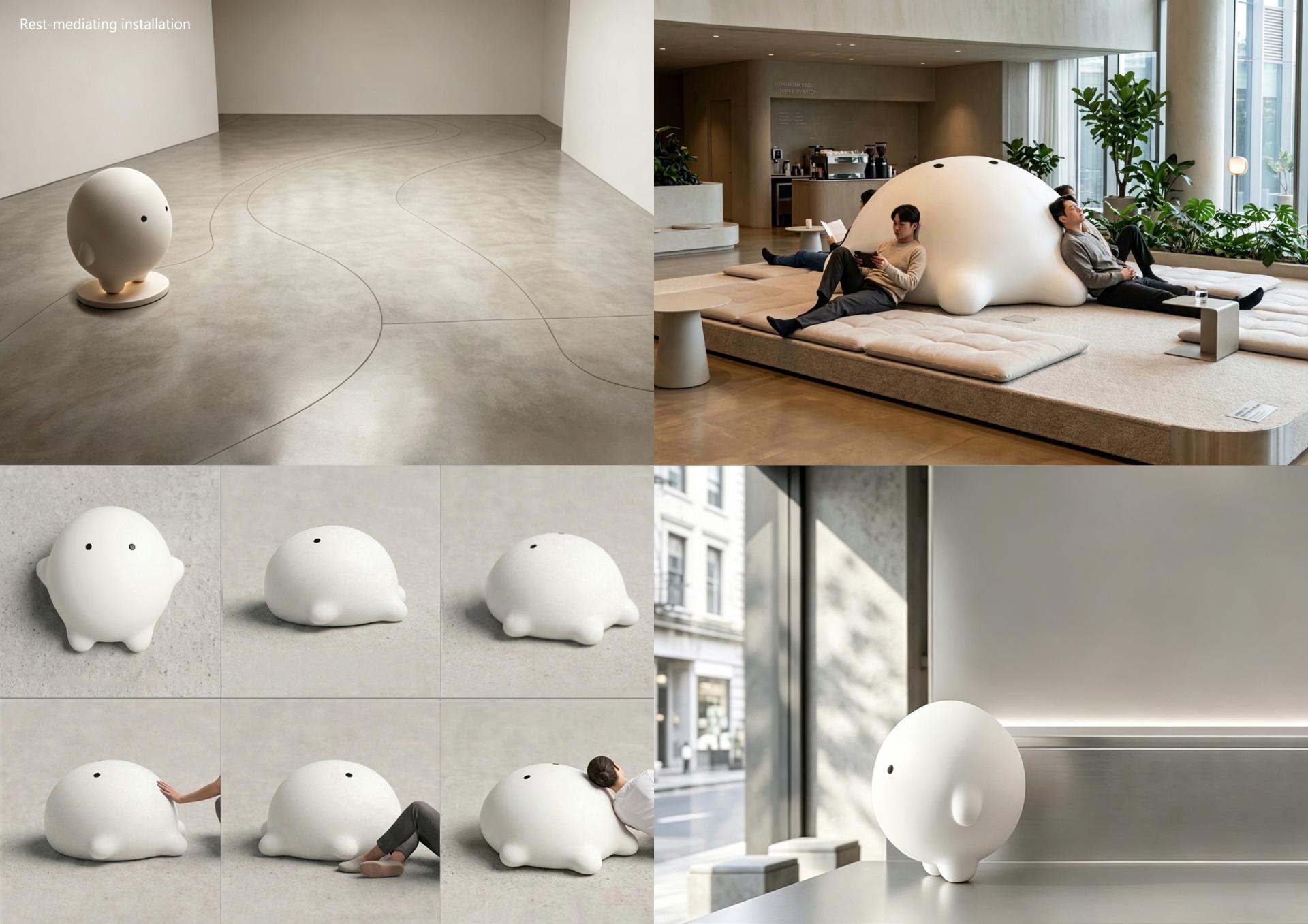
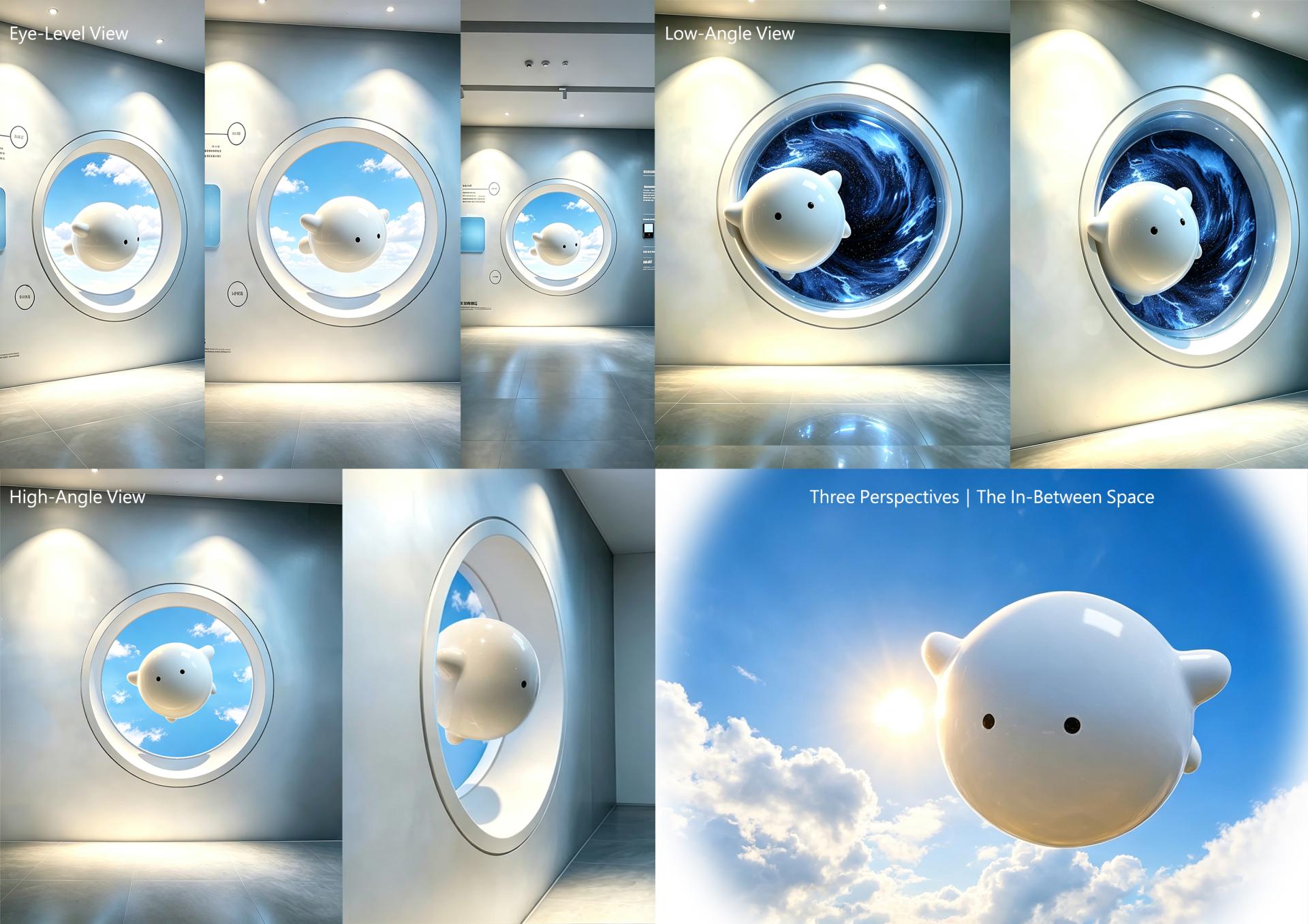
Goodji is designed not merely to be seen, but to reshape how seeing takes place.
Its form is developed through reduction, removing fixed identity and unnecessary visual information.
The oval silhouette and dual-dot visual language create an open visual structure that avoids predetermined character meaning and leaves space for interpretation.
Goodji therefore functions as an Open Reflective Vessel: a character without a fixed identity, capable of carrying different perceptions, experiences, and expressions.
—
Core Proposition
Philosophy as the Root
Culture as the Vein
Art as the Expression
Goodji explores how perception and lived experience can become expression, and how expression can return as new cultural experience.
—
System Perspective
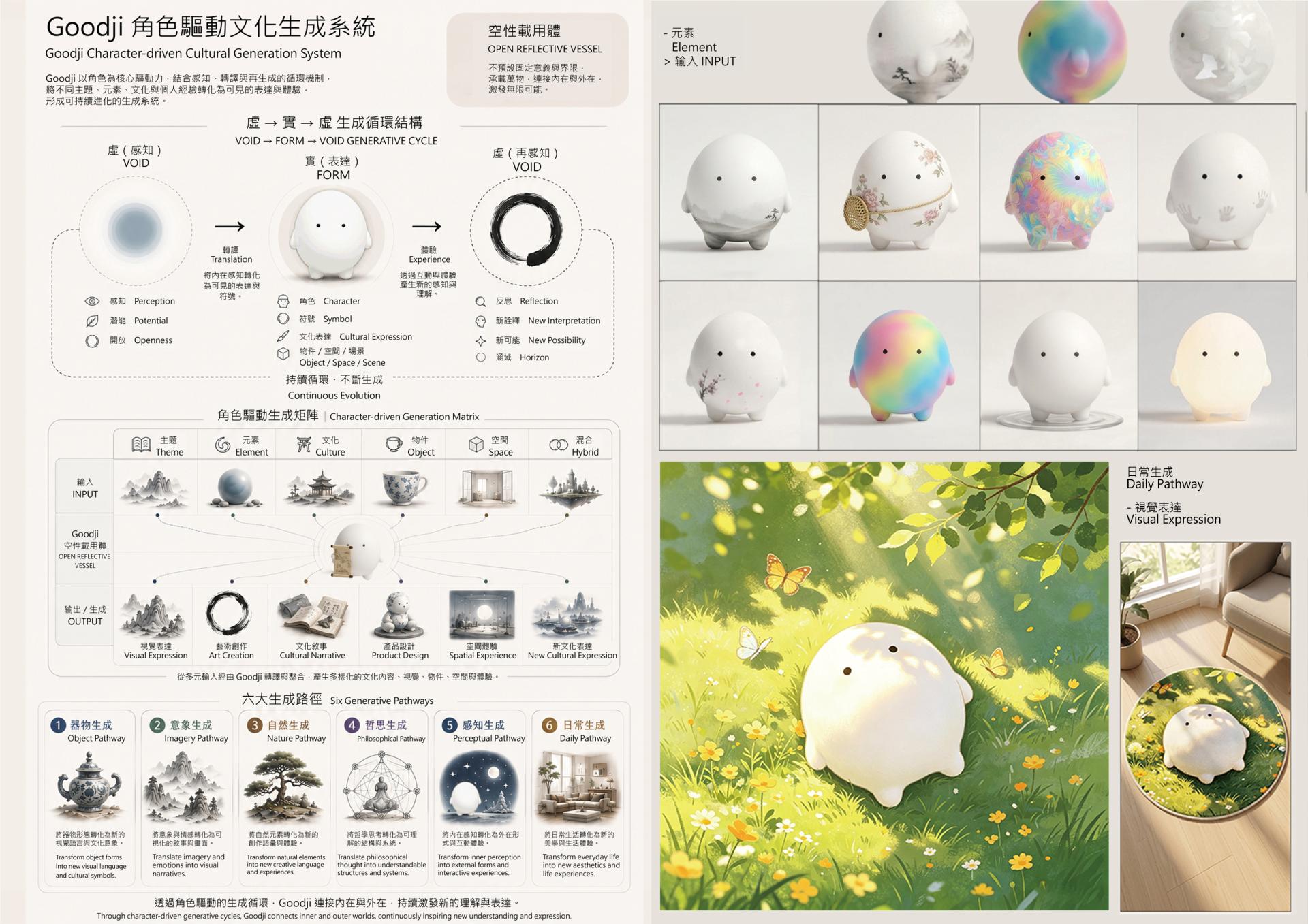
The system operates through the recursive cycle:
Void → Form → Void
Perception → Translation → Expression → Cultural Generation → New Perception.
Through this continuous cycle, the character becomes a medium through which culture can be interpreted, transformed, and regenerated.
Credits
Entrant Company
N/A
Category
Product Design - Baby, Kids & Children Products
Entrant Company
Listen System Furniture
Category
Interior Design - Residential

Entrant Company
Oakdale Design Studio LLC
Category
Architectural Design - Residential
Entrant Company
Freelance
Category
Character & Pop Design - Emotion-Based Character Expression Design