
Chromia
Entrant Company
Shuyu Wang
Category
Product Design - Lifestyle
Client's Name
Country / Region
United States
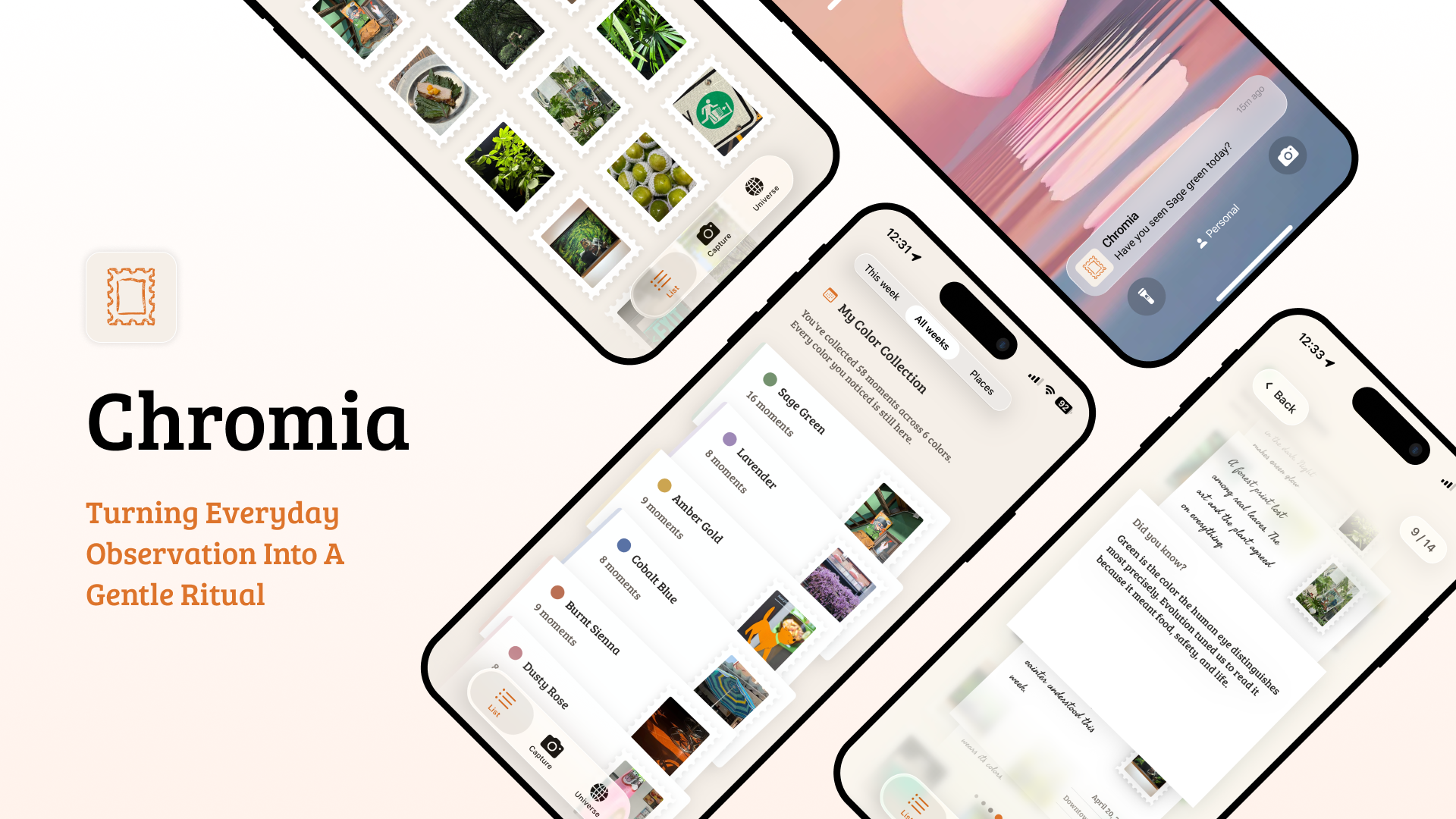
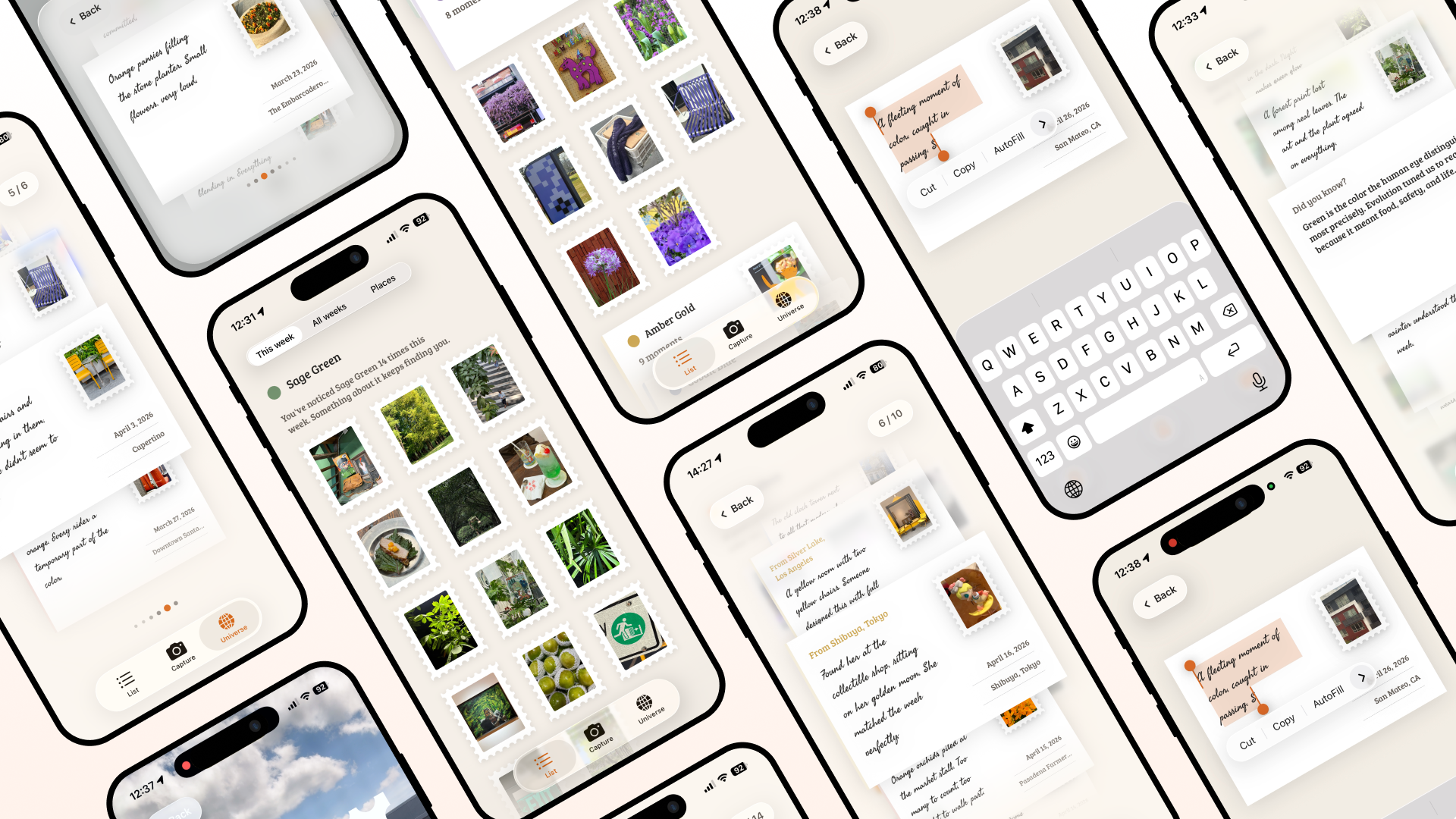
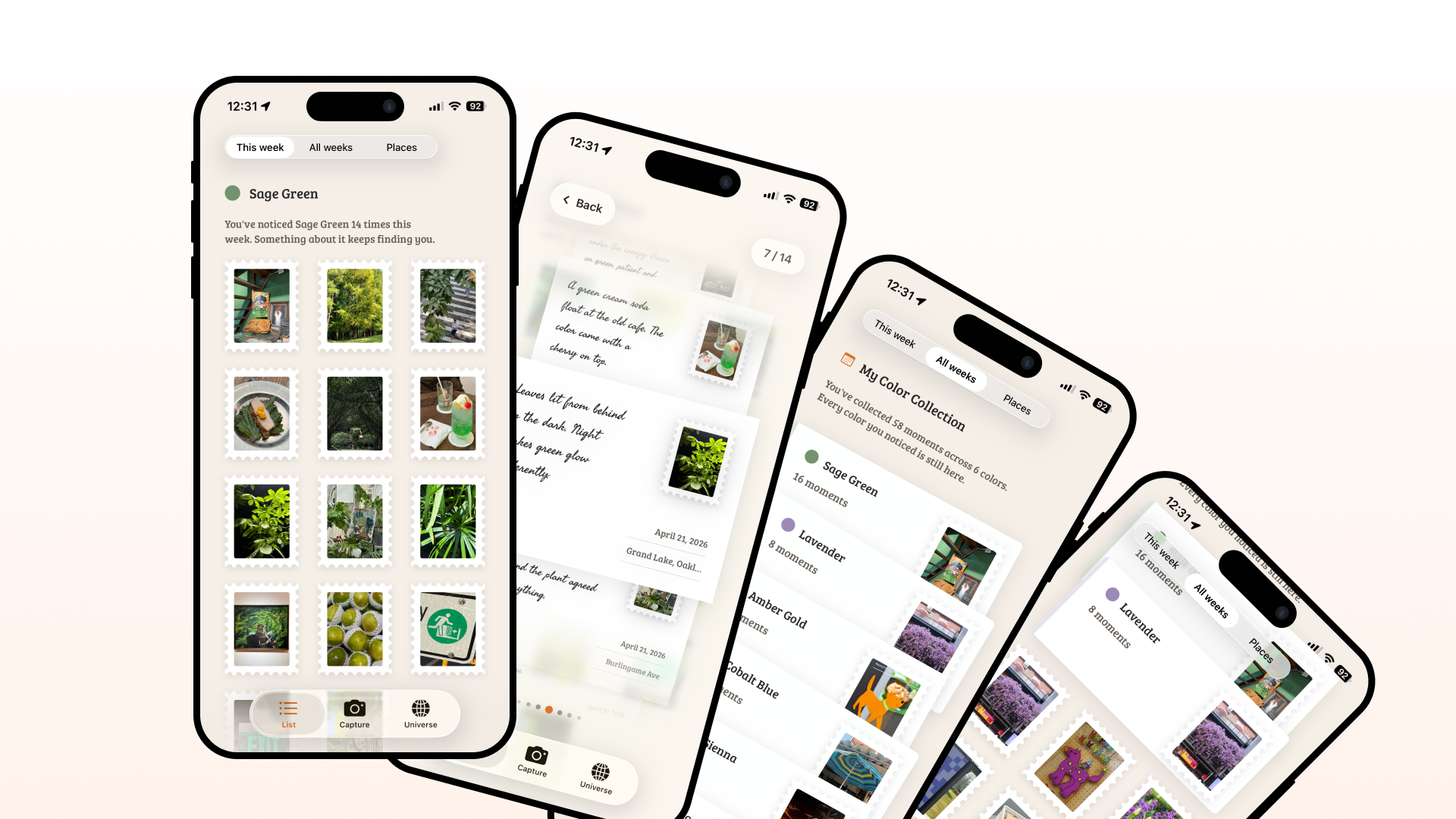
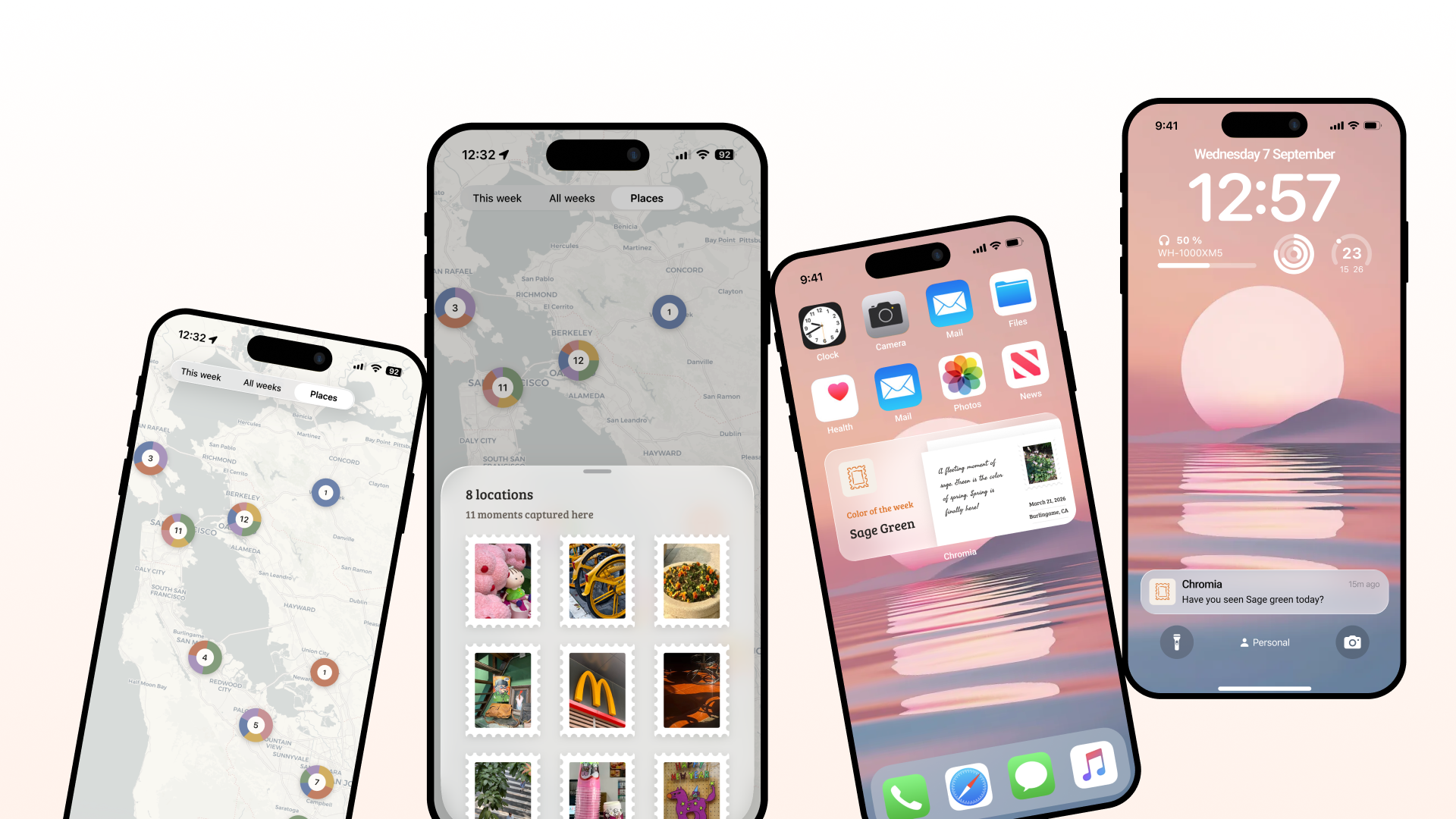
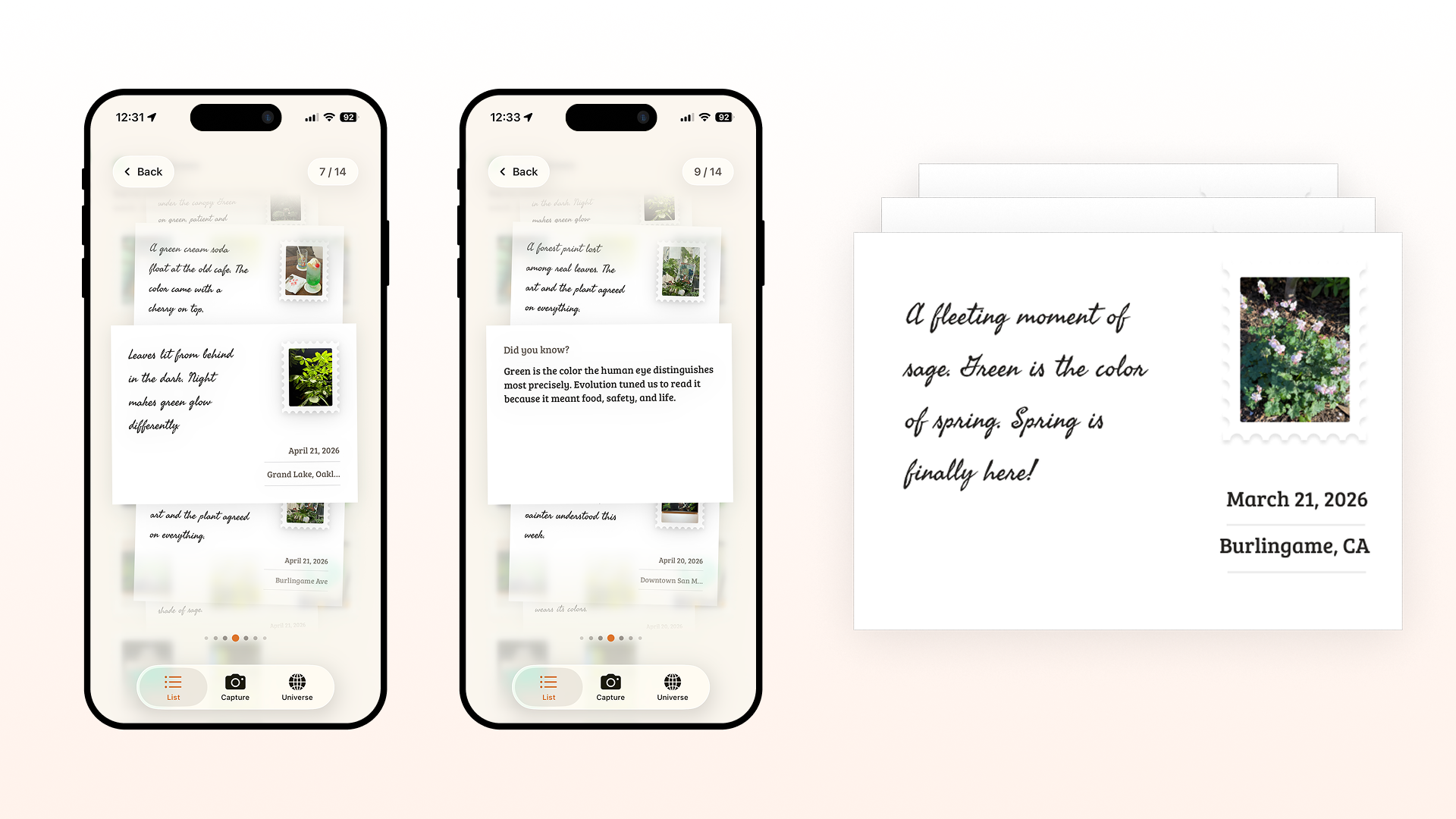
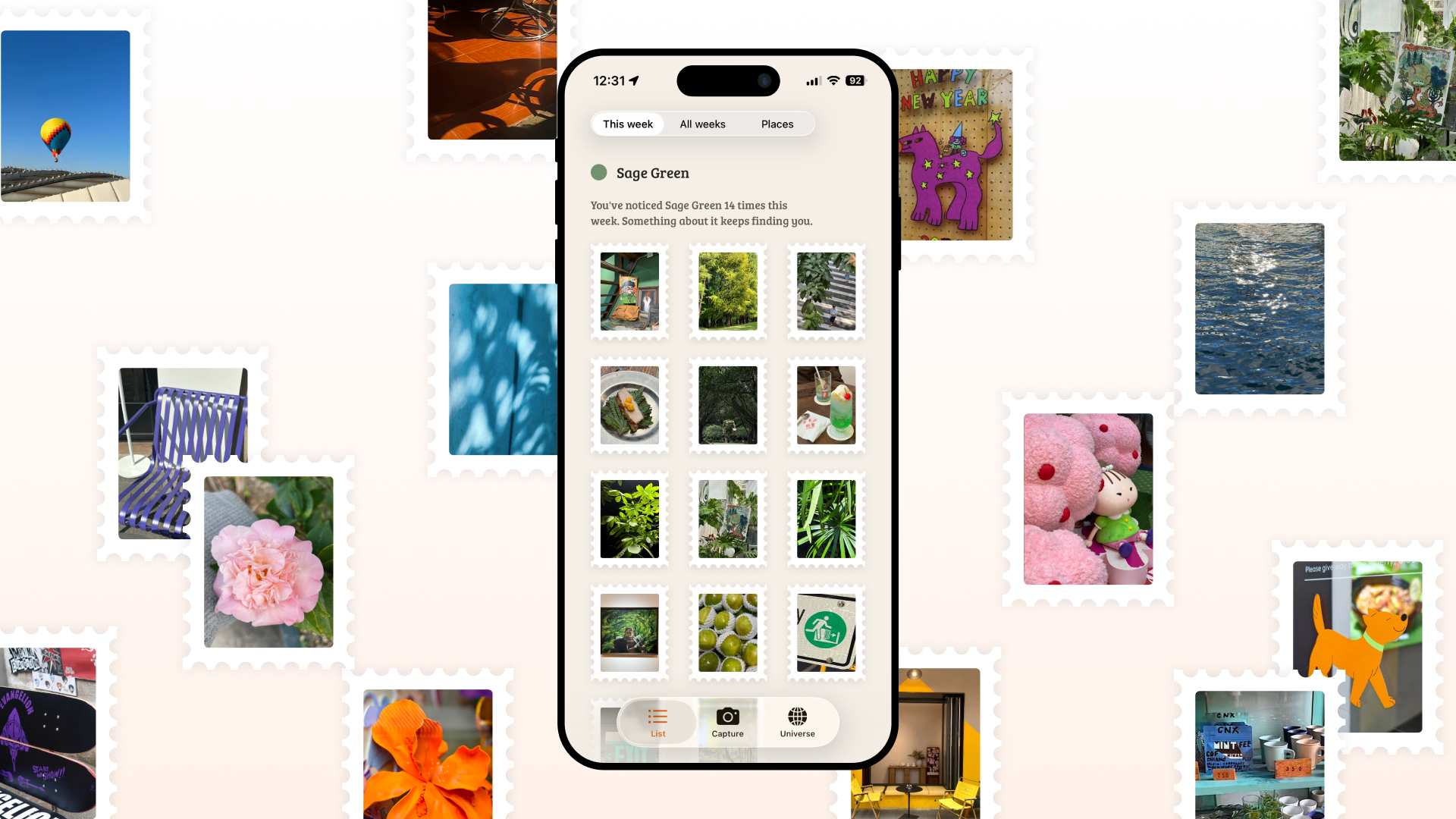
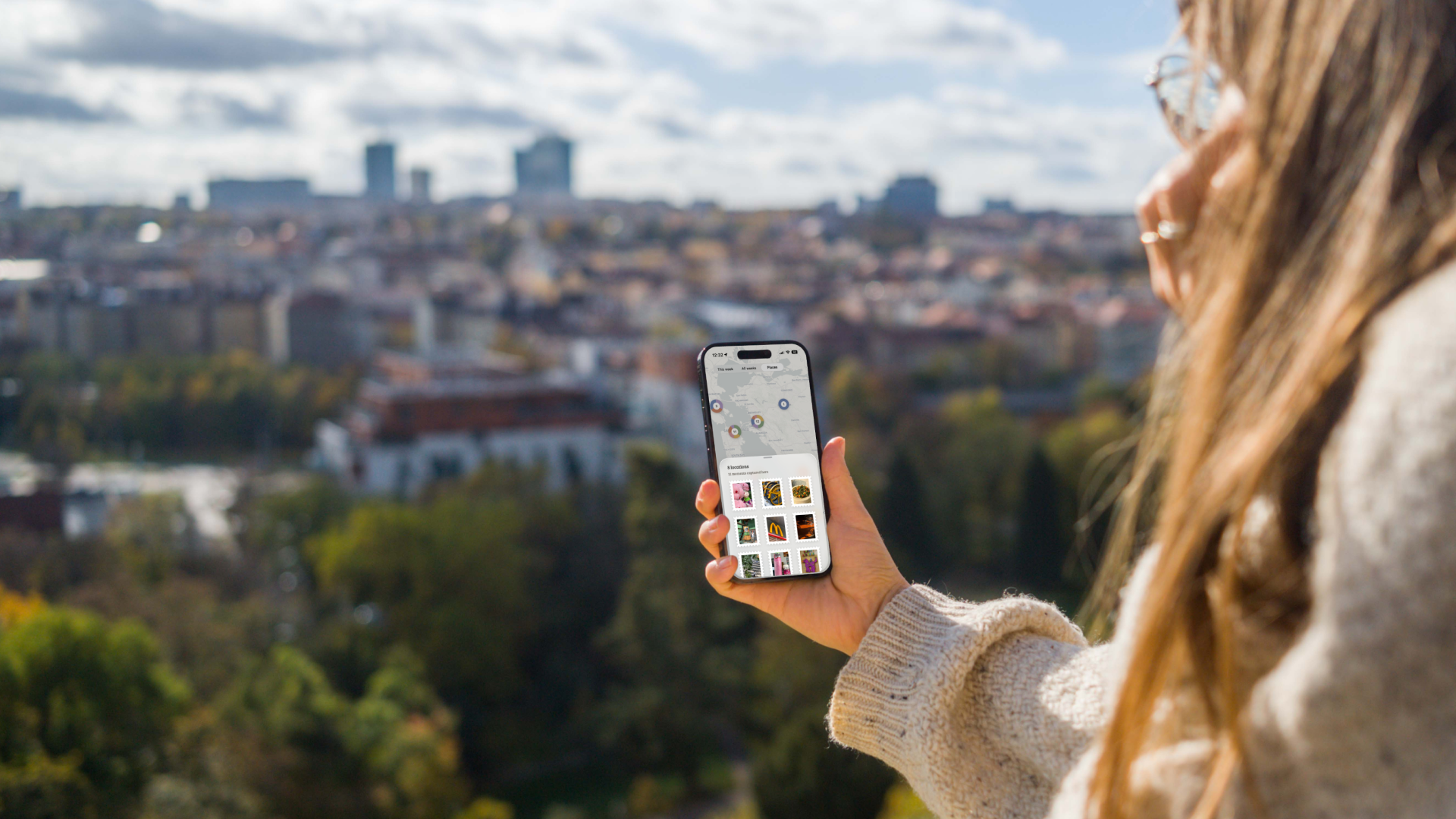
Chromia is an iOS app that gives people a reason to notice color in the world. Each week, one color is assigned to every user globally — sage green, cobalt blue, burnt sienna. Spot it in your environment, capture it through a stamp-shaped viewfinder, and the image becomes a perforated postcard you can archive, map, or mail anonymously to a stranger.
The product grows from a practice that millions already do. In 2023, the "color walk" went viral on TikTok: pick a color before you leave the house, then notice it everywhere you go. It spread because it worked — not as therapy, but as something closer to a game. It required no introspection, no journaling, no self-assessment. It asked only that you look. The mechanism underneath — behavioral activation, the clinical strategy of re-engaging with the external environment through small, structured actions — was operating exactly as designed, without anyone needing to know the term.
Chromia is organized around three spaces. The List is a private archive where postcards accumulate sorted by color rather than date — users find what they noticed by what it was, not when it happened. The Capture tab houses the stamp viewfinder, which frames each moment as a deliberate selection rather than a photograph. The Universe is an anonymous postcard exchange: send a stamp to a stranger, receive one back. No profiles, no likes, no replies. You see what someone else noticed, somewhere else, and that is the entire interaction.
What is absent from Chromia is as deliberate as what is present. There are no streaks, no push notifications, no mood tracking, no progress dashboards. The app does not ask users how they feel, because when the core symptom is an inability to notice or feel, that question is the wrong one. Chromia asks users to look outward, not inward.
The broader argument the product makes is that quietness, restraint, and slowness are legitimate features in software — not the absence of features. A practice adopted by millions deserves infrastructure built to the same standard as the mechanism underneath it.

Credits
Entrant Company
MOYINSPACE
Category
Interior Design - Installation

Entrant Company
Hedgehog AS/Hedgehog Dryer Inc
Category
Product Design - Travel Accessories
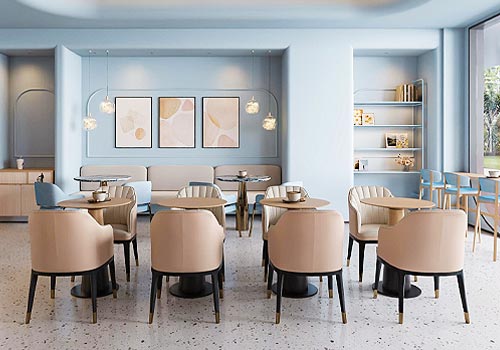
Entrant Company
G.Z DESIGN STUDIO LTD
Category
Interior Design - Restaurants & Bars
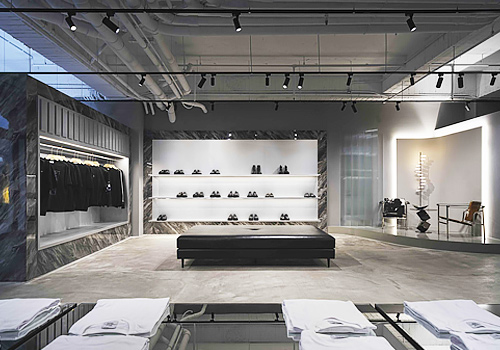
Entrant Company
KENT DESIGN
Category
Interior Design - Retails, Shops, Department Stores & Mall