
Small Lots, Big Impacts
Entrant Company
Jiwon Kim, Gyeom Chung, and Kwang Hoon Lee
Category
Architectural Design - Conceptual
Client's Name
Country / Region
United States
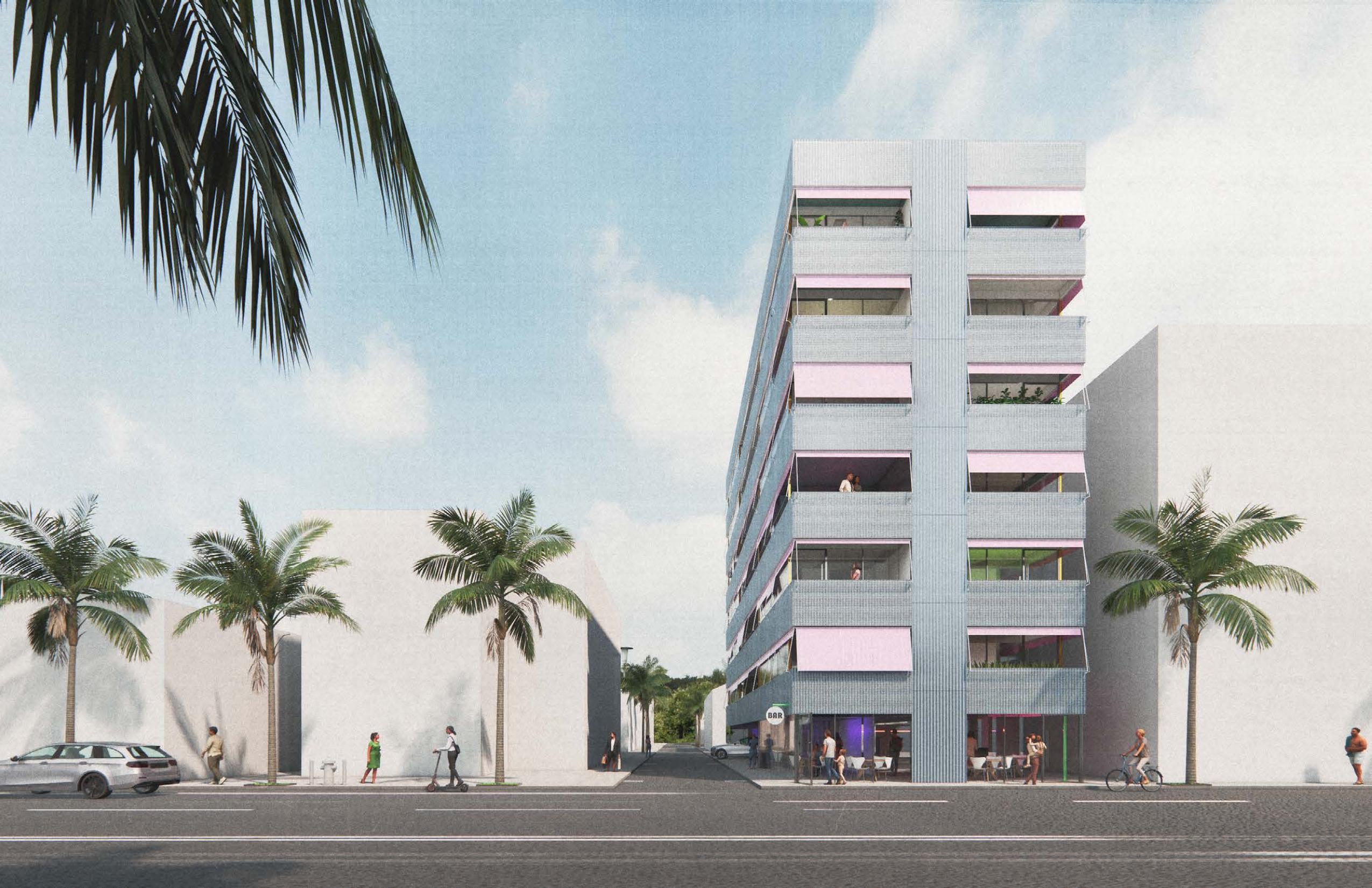
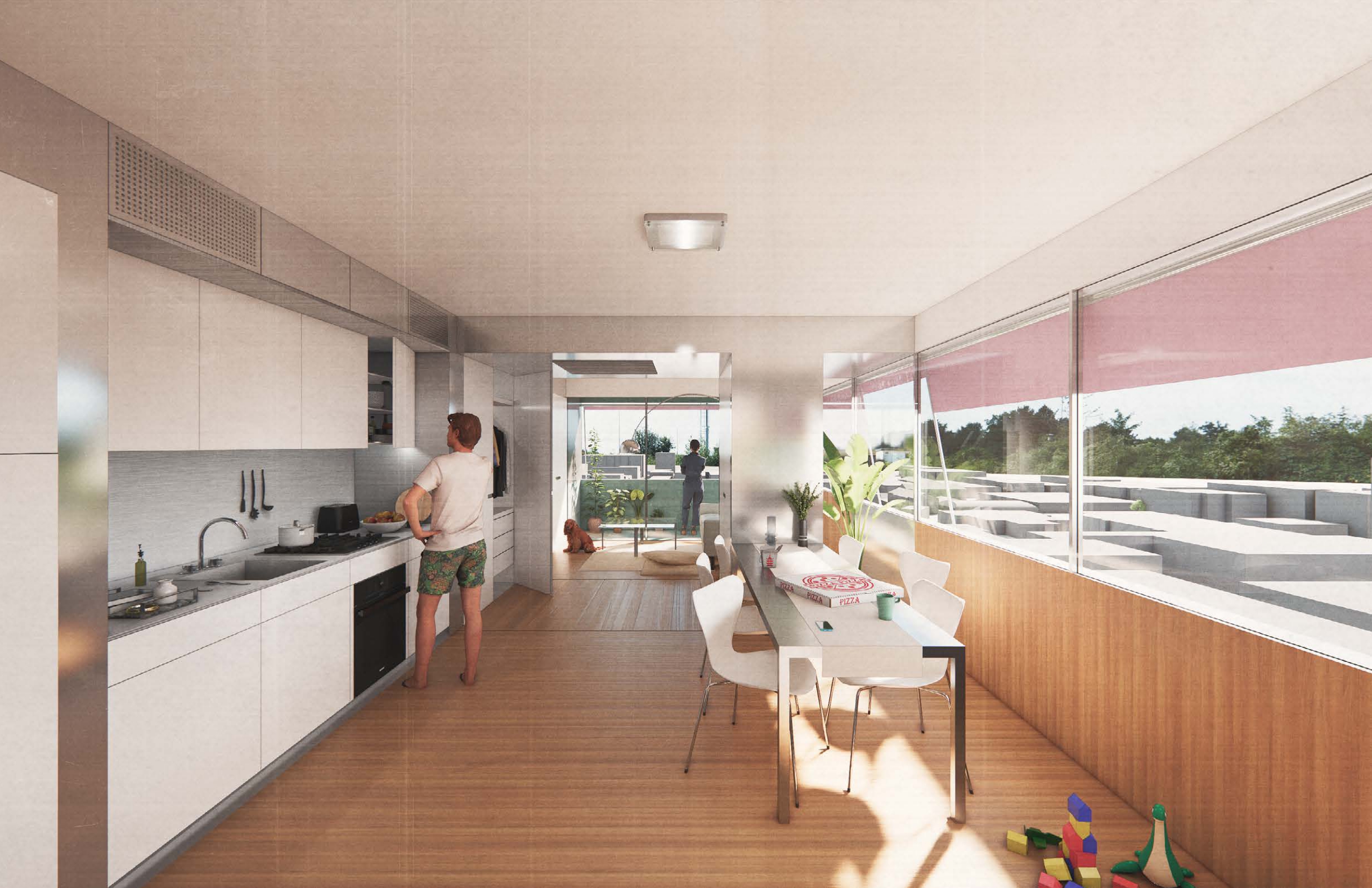
This proposal envisions housing not as a fixed product, but as a resilient framework — a scaffold that adapts to evolving ways of living. The design separates fixed infrastructure from adaptable living spaces. Kitchens, bathrooms, storage, and closets are consolidated into stacked cross-shaped service volumes. These are not mere amenities, but organs — fundamental to dwelling. These shared cores carry utilities, structure, and fire-rated assemblies, forming the building’s durable backbone — a place to wash, a place to cook, and a place to store. Around them, dwelling spaces remain open, flexible, and easily reconfigurable.
Here, the infrastructure of dwelling — what must not change — is fixed and static. But the form of living — what must — is free. They carry warmth and water, secrets and steam. Around these spines, rooms crystallize like salt. Some for sleep. Others for soup. All for change. The essential components of living — cooking, bathing, storing — are no longer tucked away in hidden corners, but instead shape the very logic of the architecture. Their repetition fosters efficient prefabrication, easier maintenance, and streamlined construction timelines. This core-and-infill strategy simplifies fire recovery and future adaptability. The ground level activates the street with community-oriented programs. Durable where necessary, flexible where possible, this housing scaffold is built to outlast trends and transitions.
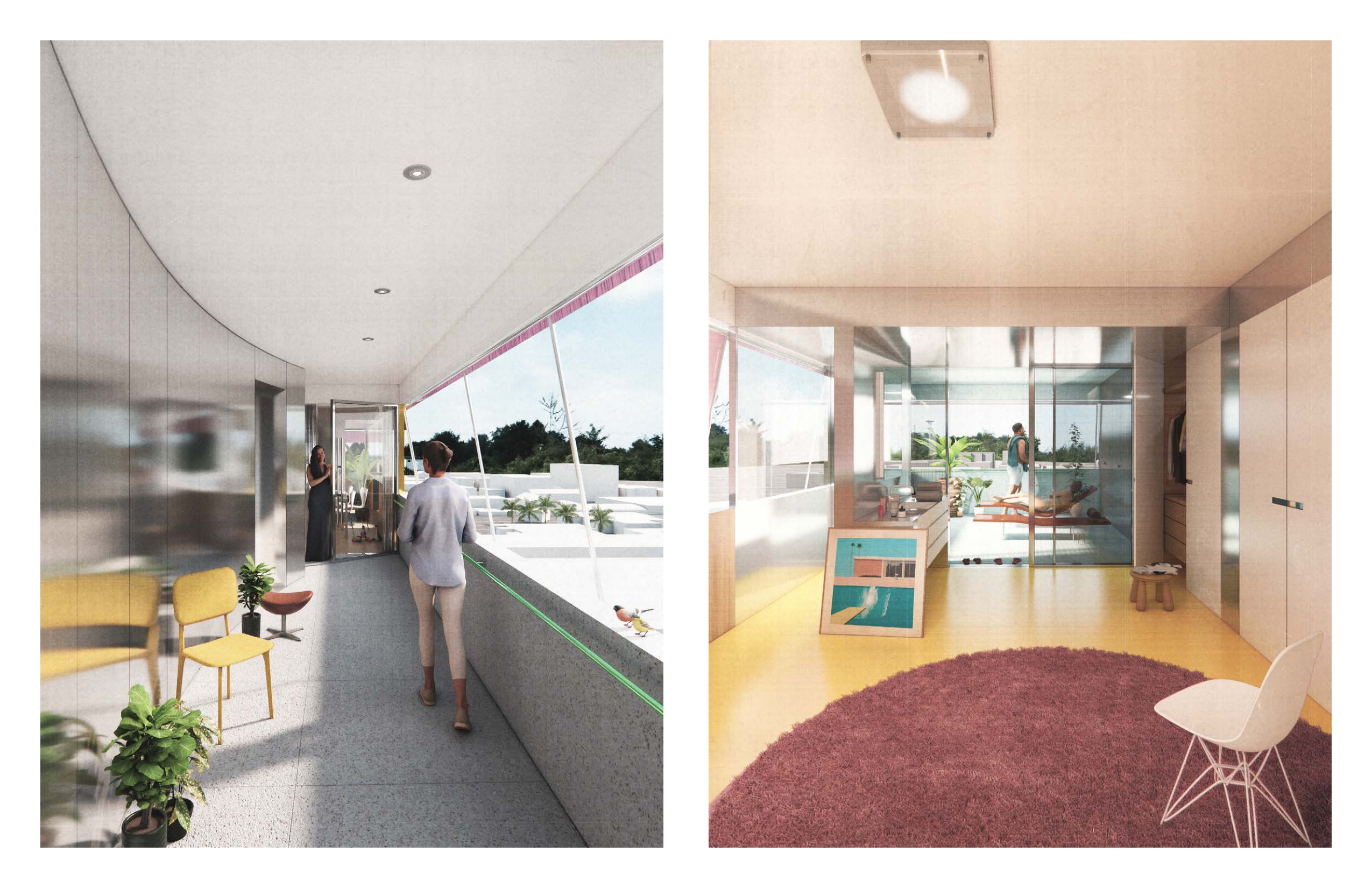
The project offers diverse unit types — from studios to family apartments — all organized around shared balconies and communal outdoor terraces. Each unit is cross-ventilated and flooded with natural light from multiple directions. Adaptability is built in: over time, units can expand, contract, or be reconfigured without disrupting the core infrastructure. Designed for replication across various small-lot sites, this prototype uses modular logic and material efficiency to reduce costs while maintaining high-quality spatial standards. The building envelope integrates passive shading, natural ventilation, ensuring long-term energy performance and climate resilience. Rather than imposing a fixed way of life, it supports life as it changes.
Credits
Entrant Company
Jing Shang Interior Design
Category
Interior Design - Residential
Entrant Company
DOOR SPACE DESIGN
Category
Interior Design - Restaurants & Bars
Entrant Company
Cheng He Interior Design
Category
Interior Design - Restaurants & Bars

Entrant Company
Miles Wang
Category
Furniture Design - Bedding